
Why "Becoming a Woman of Substance" Feels More Relevant Than Ever
by Karma Kitaj | Blogging | Jul 6, 2026
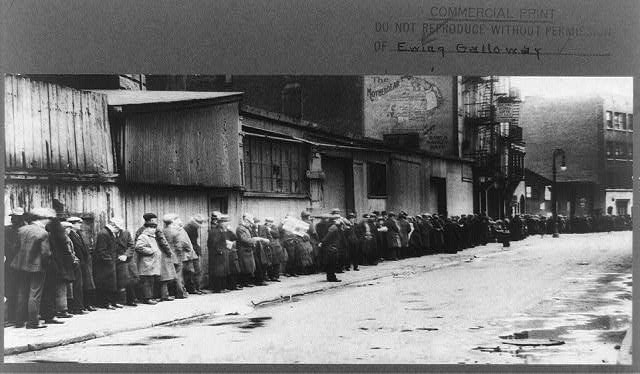
A breadline during the Great Depression. Library of Congress.
The 1930s were a time of profound crisis in the United States and the world. The Great Depression had thrown millions out of work. Breadlines stretched around city blocks. Families packed everything they owned into cars and fled the dust storms of the far Midwest, heading to California, lured by promises of work in the fields, which never materialized. The Federal Theatre Project, part of the WPA, was created to keep those people employed in theater from being on the breadlines. It became one of the most innovative cultural programs in American history — and was shut down by anti-Communist legislators on the House Un-American Activities Committee (HUAC) in a few short years, seeing some performances as a threat.
When I wrote Becoming a Woman of Substance, since I don't plot out the whole story, but merely follow the protagonist wherever she takes me, it happened to be the period of the Great Depression. Miriam found something she was passionate about despite the world collapsing around her. She found meaningful work, creative purpose, and deep human connection.
Today, as arts funding has been drastically curtailed, families struggle with economic anxiety, fears of not having access to necessary healthcare and the threat of losing Medicare and Social Security, Miriam's story resonates in ways I couldn't have anticipated when I wrote it.
We are at another such moment. The question Miriam asks herself — how do I make a meaningful life in the middle of chaos? — is one many of us are asking right now.
Her answer, arrived at over decades, is that meaning comes not from waiting for the world to stabilize, but from doing the work that matters, building the relationships that sustain you, and refusing to become smaller than you are.
That feels like the right message for right now.