
Researching Becoming: Hallie Flanagan and the Federal Theatre Project
by Karma Kitaj | Blogging | Jul 24, 2026
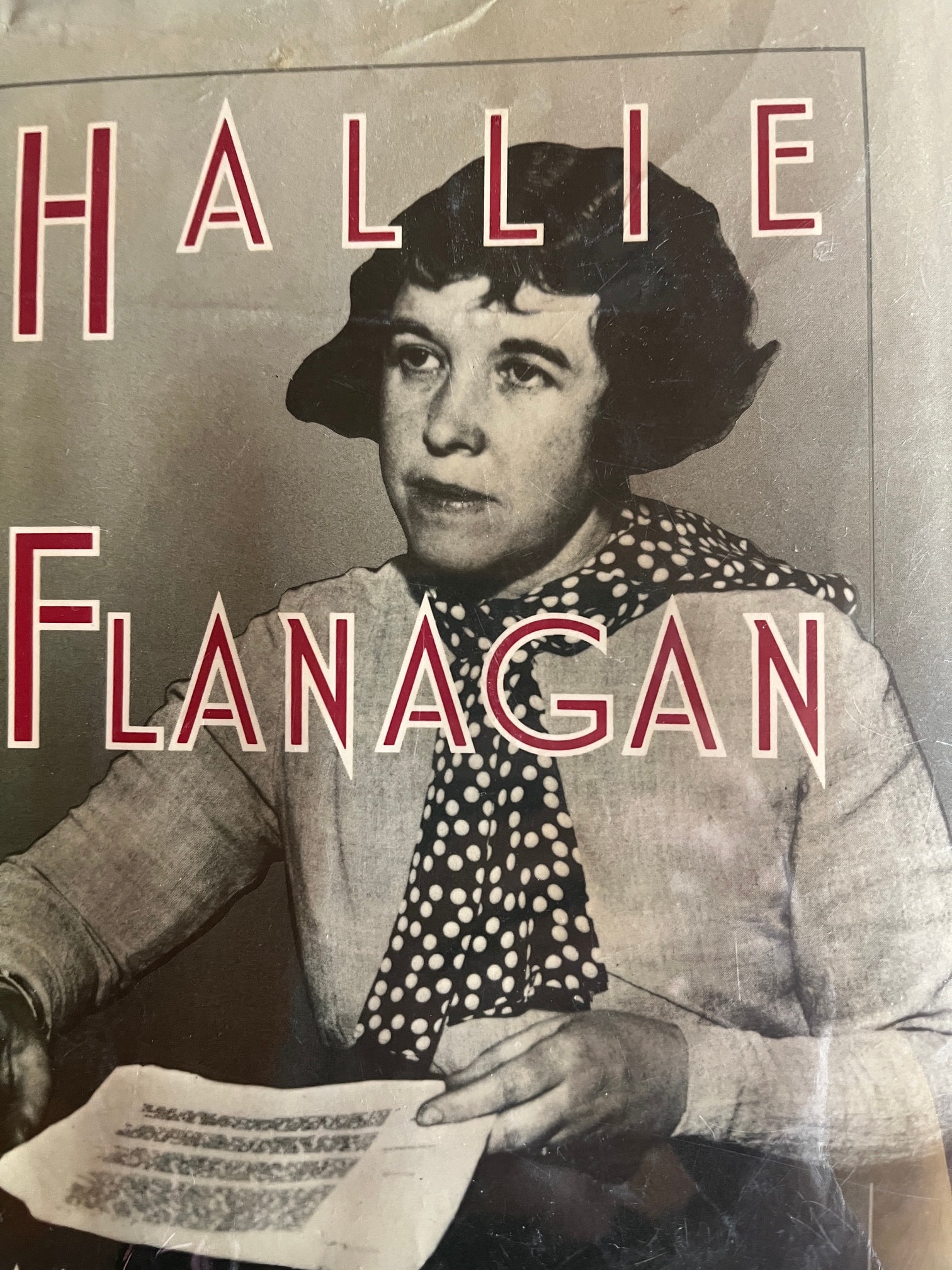
Hallie Flanagan, director of the Federal Theatre Project.
If Miriam's mentor in Becoming a Woman of Substance was going to be Hallie Flanagan — the visionary director of the Federal Theatre Project — then I needed to research her widely and in depth. Not just the facts of her career, but who she was as a person: how she spoke, how she led, how she was perceived by those who worked for her.
Vassar, Smith, and the People Who Knew Her
Hallie Flanagan had been a theater professor before her role as head of the Federal Theatre Project. She taught at Vassar and then at Smith College, where a theater now bears her name. I spoke with professors at both universities who knew of her teaching and her reputation as someone beloved by students. Those conversations helped me understand how to portray her relationship with Miriam — the warmth, the intellectual rigor, the fierce belief in the transformative power of theater.
The Archives: Smithsonian and Library of Congress
The Federal Theatre Project archives are kept at the Smithsonian and at the Library of Congress. Working with those archives, I was able to find direct quotes from many of the people who worked for Hallie — their voices, their memories, their accounts of what it was like to be part of this extraordinary program.
The book Voices from the Federal Theatre, edited by Bonnie Schwartz, was invaluable — interviews with many of the theater professionals who got a pittance for their work, but it was reliable pay during the Depression. Their stories informed the scenes I wrote about Miriam's time with the Project.
The HUAC Interrogation — and Its Echoes Today
When Flanagan was interrogated by the House Un-American Activities Committee for alleged "communist" sympathies in the theater productions, I was able to find extensive documentation about Martin Dies, the congressman who headed that committee — one of those extreme anti-communist conspiracy theorists whose tactics feel disturbingly familiar today.
Flanagan's testimony before the committee is published, and excerpts appear in my book. That interrogation marked the end of the Federal Theatre Project's funding. The parallels with what we see happening now — the targeting of arts funding, the accusations of subversion, the silencing of dissent — are not lost on me.
The Cradle Will Rock
Tim Robbins' book The Cradle Will Rock includes wonderful photographs and descriptions of the plays performed by those out-of-work theater professionals. It brought the era to life in a way that pure archival research cannot.
Another invaluable resource was Free, Adult, Uncensored: The Living History of the Federal Theatre Project, edited by John O'Connor and Lorraine Brown. It contains wonderful stories of many of the most-watched plays the FTP presented, along with a wealth of old photographs that made the period feel immediate and real.
Peggy Guggenheim
One chapter was devoted to Peggy Guggenheim, which gave me many wonderful places to look for stories about her. My favorite: when asked from the audience, "How many husbands have you had?" Peggy responded: "Do you mean my own, or other people's husbands?" That line went straight into the book.
Dorothea Lange and the Dust Bowl
When Miriam goes out west to interview people who had fled the Dust Bowl, the stories she "heard" were informed by many documented accounts of the poor families who were erroneously lured to California with promises of work picking produce — only to be made to feel unwelcome by the locals. These stories are well documented, as are the photographs of Dorothea Lange, whose images of the Depression remain among the most powerful ever taken.
All of this research — Hallie Flanagan's archives, the HUAC transcripts, Peggy Guggenheim's wit, Dorothea Lange's photographs — took years. And I was fascinated every step of the way. Although I barely studied history in school, I found myself completely absorbed in discovering the history of the period from 1900 to the 1960s.
History, it turns out, is most alive when you're trying to bring a specific person back to life within it.
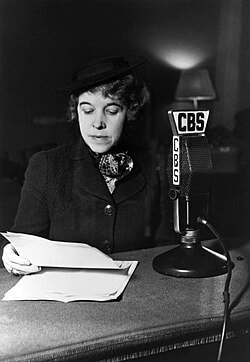
Hallie Flanagan speaking on the radio about the Federal Theatre Project.